


The BHDD Alternative Transportation program provides rides for non-violent, involuntary, adult behavioral health patients throughout South Carolina from emergency departments to behavioral health facilities. 
 

The program provides safe, secure, and restraint-free transport in an unmarked vehicle, avoiding the stress and trauma of being placed in a police vehicle in handcuffs. It also alleviates law enforcement agencies from having to provide these transports. 
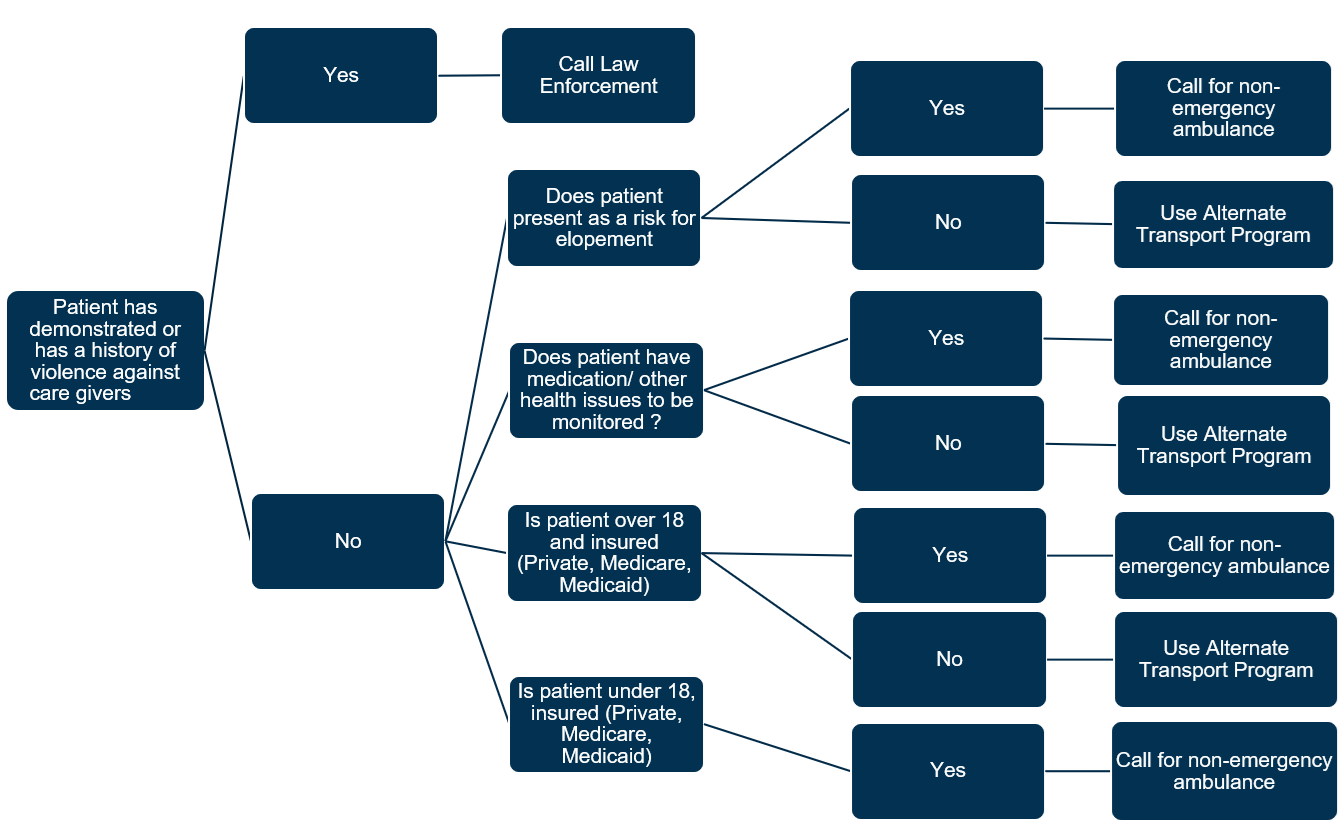
Physicians determine when this transportation option is appropriate for each patient and arrange transportation with the provider. 

  • The program was first conceived to provide an alternative to law enforcement officers transporting nonviolent, adult (18+) psychiatric patients who are the subject of an involuntary emergency admission.
  • Since at least 1952, South Carolina law has required law enforcement to respond to requests for these transports.
  • Law enforcement agency regulations require all subjects placed in patrol vehicles to be handcuffed or restrained as a safety precaution, but patients who are involuntarily hospitalized due to a need for mental health treatment have broken no criminal law.
  • The use of law enforcement for transport and handcuffs during transport adds to the stigma and trauma these patients experience.
  • In 2022, the SC General Assembly granted funds to the former SC Department of Mental Health for the program. This allowed the agency to contract with Allied Universal Services (AUS) to use trained drivers and specially equipped vehicles to provide safe and secure transports to these patients.
  • The program provides improved patient care, reduces patient stigma, and allows some relief for overburdened law enforcement agencies across the state.

To be eligible for Alternative Transport, the patient must be:

  • Subject of involuntary emergency psychiatric admission to a hospital;
  • Non-violent (drivers do not restrain patients);
  • Not an elopement risk;
  • An adult (18 years of age or older);
  • Ambulatory and able to get into and out of a vehicle on their own;
  • Physically able to fit comfortably in the SUV; and
  • Medically cleared with no additional medical needs.

  • Drivers must pass a criminal background check and complete extensive training on mental health topics, including de-escalation.
  • Drivers wear professional attire (polo shirt and dress pants) that does not resemble a law enforcement uniform.
  • Vehicles are secure, nondescript SUVs, equipped with a camera system that allows the driver to monitor the patient during the transport; cameras record both the patient and driver.
  • Vehicles are GPS equipped for monitoring location and safe driving practices
  • Vehicle patient compartments permit safe transport without restraints. Once the patient is closed in the back seat of the vehicle, they cannot get out without assistance.
  • Clear panels separate the driver from the patient and divide the back seat so two same gender patients can be transported in one trip.

Alternate Transport is provided at no cost to the patient or the hospital.

flow chart showing transportation methods

Program resources are determined by the number of facilities participating in the program, transport volumes, average round trip distances, and response time standard.

24/7 Patient Transports

AUS Dispatch: 1-833-861-0871 or 803-521-4271 (Mobile/back-up)


If your facility would like to learn more about utilizing the Alternative Transportation program, contact BHDD at 803-898-8581.