

State Suicide Prevention Plan Press Conference image
A Plan for Hope: Accompanied by members of the SC Suicide Prevention Coalition, Co-Chair Sen. Katrina Shealy presents the South Carolina Strategy for Suicide Prevention: 2018-2025 during a press conference in April 2019.

The SC Suicide Prevention Coalition

The office set goals for itself and The Palmetto State, such as implementing stronger infrastructure within state and private medical and behavioral health care systems, schools and various other community settings to better serve individuals with thoughts of suicide.

In 2016, the South Carolina Suicide Prevention Coalition reassembled, consisting of leadership and experts from state agencies, nonprofits, members of the S.C. Legislature, and key community stakeholders who also lead and collaborate on other suicide prevention efforts across the state. The Coalition’s primary focus is the implementation of the South Carolina Strategy for Suicide Prevention.

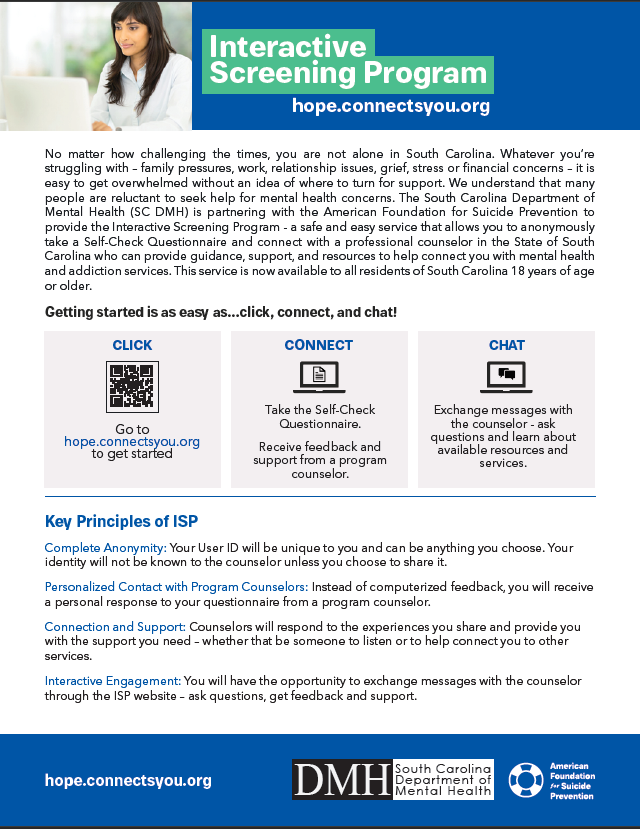
Self-Check Questionnaire/Screening Tool

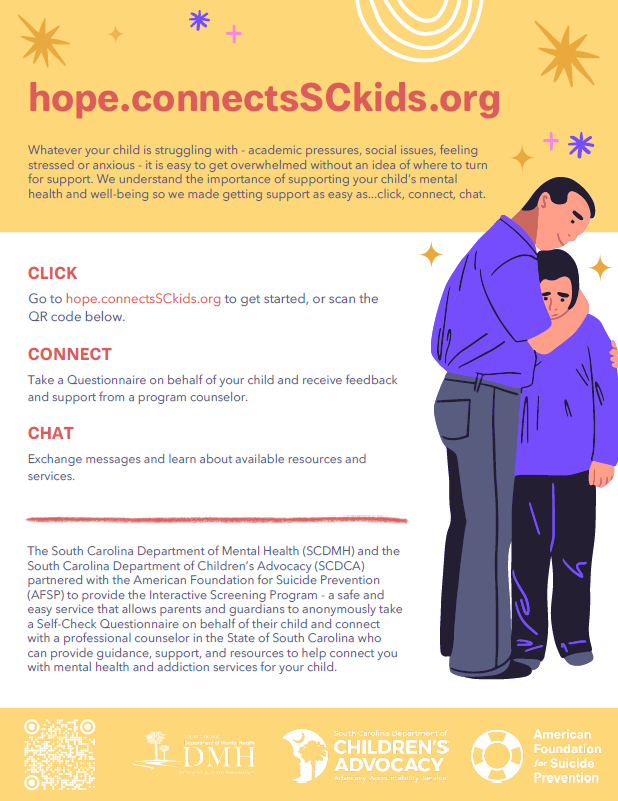
No matter how challenging the times, you are not alone in South Carolina. BHDD Office of Mental Health and BHDD Office of Substance Use Services (OSUS) have teamed up to offer this safe, easy and free service that allows you to anonymously take a Self-Check Questionnaire and connect with a professional counselor who can offer guidance, support, and resources to help connect you with mental health and addiction services. We are ready to help if you are overwhelmed by COVID-19 challenges, feeling overly stressed or anxious, coping with a natural disaster, struggling with addiction, feeling depressed and don’t know where to turn. Visit https://hope.connectsyou.org/ to submit a questionnaire today.

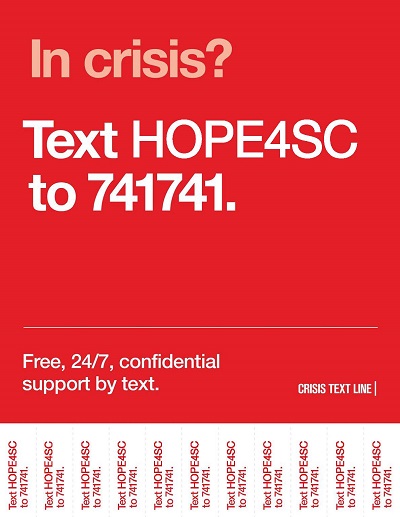
Please Note: This is not an emergency response system or crisis intervention service. If you are in crisis or contemplating suicide, please call or text the Suicide and Crisis Lifeline at 988 or BHDD Office of Mental Health’s mobile crisis line at 1-833-364-2274.

Self-Check Questionnaire

Print Resources

As suicide is a public health issue, the Office of Suicide Prevention (OSP) encourages the reprinting, distribution and sharing of print materials with the public by anyone who desires to be champions of suicide prevention. Altering these products, however, is prohibited, as is the distribution of these materials in association with for-profit endeavors. These OSP products are FREE, and we implore you to share them in the same spirit.
South Carolina Strategy for Suicide Prevention 2022

South Carolina Strategy for Suicide Prevention 2022 graphic

In late 2018, after nearly two years of collecting data, evaluating research and reviewing evidence-based training, strategies and procedures, the Coalition released the South Carolina Strategy for Suicide Prevention: 2018-2025 with the goal of reducing suicide by 20% by 2025. The Strategy is a living document that contains a wealth of information for how any organization, community or individual can help fight suicide in South Carolina. In 2022, the Coalition released an updated State Plan to reflect the progress made, emerging trends and needs, as well as new goals for the state.

Safe Media Guidelines

It Matters How We Report on Suicide

Preventing suicide is a community effort, and as valued providers of information in all communities, journalists and news companies play a unique role in helping reduce suicide in South Carolina. More than 50 studies(1) indicate certain types of coverage can increase the likelihood of suicide in vulnerable individuals. The magnitude of the increase is related to the amount, duration, and prominence of coverage. Read more about safe reporting below and safe messaging at suicidepreventionmessaging.org.(1)

Unsafe Reporting Can Cost Lives

Though journalists generally don’t mean to cause harm when reporting on suicide, it’s important we stick to safe reporting guidelines. Unsafely reporting on suicide can contribute to suicide contagion, resulting in more suicides.

“The research is clear: inappropriate messaging of deaths by suicide can trigger others to attempt suicide. Your help is especially important with reporting on the death of Robin Williams, as your story will reach a wide audience, including people already at risk, who may be contemplating suicide. Word choice, phrasing and content matters. Please take a moment to make sure your reporting is safe. You just might save a life.

I hope Williams’s death will start a thoughtful conversation about suicide and mental health. Take the opportunity to encourage readers struggling with mental health issues to seek the help they need to get well—and stay—healthy. Please see our short guide to safe reporting. Thank you for helping to prevent suicide.”(2)

Robert Gebbia, Chief Executive Officer
American Foundation for Suicide Prevention

A Few Guidelines for Media Reporting

Do:

  • Include links to treatment services, warning signs and Suicide and Crisis Lifeline (988)
  • Include stories of hope
  • Monitor comment sections to identify hurtful statements, or people expressing suicidal thoughts
  • Contact an expert on suicide to get the facts.
  • Report suicide as a health issue

Avoid:

  • Showing videos or photos of the method or location used
  • Framing suicide in terms of success
    • For example, instead of using “committed suicide,” please say “died by suicide,” and try to avoid using the words “successful” or “failed” while reporting on a suicide attempt.
  • Romanticizing the death
  • Describing suicide rates as skyrocketing, an epidemic, or other strong, potentially stirring terms
  • Publishing text from a suicide note
  • Quoting police or first responders
  • Describing a suicide as inexplicable or without warning
References

National Action Alliance for Suicide Prevention (2018). Action Alliance Framework for Successful Messaging. Retrieved from http://suicidepreventionmessaging.org/(1)

American Foundation for Suicide Prevention (2019). Unsafe Reporting Can Cost Lives. Retrieved from https://afsp.org/unsafe-reporting-suicide-can-cost-lives/(2)